February 9, 2023
Over the past 30 years in animal nutrition — from formulating premixes to troubleshooting field-level challenges — one thing has remained clear: trace minerals, though needed in small amounts, play an outsized role in livestock health and productivity. Whether you’re managing a broiler farm, a dairy unit, or a swine operation, ensuring the right balance of trace minerals in the feed is critical. These nutrients directly impact growth, immune strength, fertility, and overall animal performance.
What Are Trace Minerals?
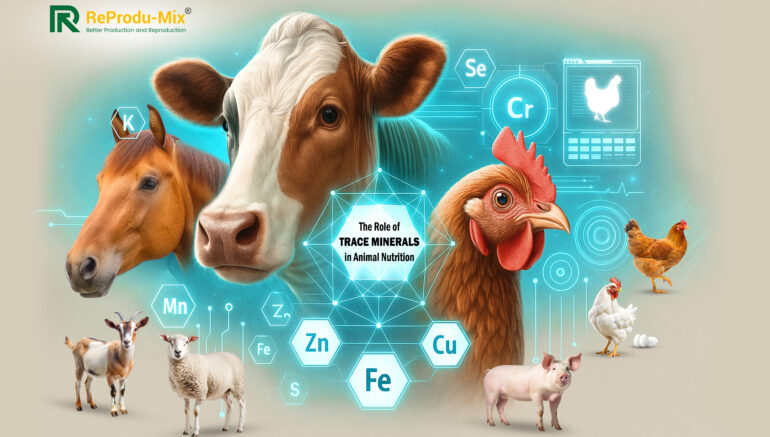
Trace minerals (or microminerals) are essential nutrients required in very small quantities. Despite their low inclusion rates, they drive numerous biological functions vital to the animal’s well-being. The most important trace minerals in livestock nutrition include:
- Zinc (Zn)
- Copper (Cu)
- Manganese (Mn)
- Selenium (Se)
- Iron (Fe)
- Cobalt (Co)
- Iodine (I)
Even minor deficiencies can lead to performance losses, poor immunity, reproductive challenges, and metabolic disorders.
Strengthening Immunity and Disease Resistance
Zinc, copper, and selenium are key players in maintaining a strong immune system. They
- Activate antioxidant enzymes like superoxide dismutase (SOD) and glutathione peroxidase
- Enhance white blood cell response
- Lower the risk of infections such as mastitis and respiratory illnesses
Field Example: Dairy herds supplemented with organic forms of zinc and selenium consistently report lower somatic cell counts and improved udder health.
Supporting Reproduction and Fertility
Trace minerals such as copper, manganese, and selenium support:
- Hormonal regulation and ovarian activity
- Healthy sperm development
- Prevention of reproductive disorders like retained placenta and early embryo loss
Even when energy and protein levels in the diet are sufficient, a lack of essential trace minerals can hinder reproductive efficiency.
Enhancing Growth and Feed Efficiency
Trace minerals influence structural development and nutrient utilization:
- Manganese aids in cartilage and bone formation
- Zinc promotes skin health and appetite stimulation
- Iron supports red blood cell production and oxygen transport
Well-balanced mineral supplementation leads to improved average daily gain (ADG) and better feed conversion ratios (FCR).
Regulating Enzymes and Hormones
Many metabolic processes rely on trace minerals as cofactors:
- Iodine is essential for thyroid hormone production, which regulates metabolism
- Cobalt is required for vitamin B12 synthesis in the rumen
Without adequate mineral levels, enzyme activity declines and metabolic inefficiencies set in — especially under stress.
Chelated vs Inorganic Minerals: What’s the Difference?
| Aspect | Inorganic Minerals | Chelated (Organic) Minerals |
| Absorption | Moderate | High |
| Stability | May react with antagonists | Stable in gut environment |
| Cost | Lower | Higher |
| Best Use | Maintenance diets | Stress periods, breeding, growth |
Practical Insight: A strategic mix of inorganic and chelated minerals often yields the best results — balancing performance benefits with cost-efficiency
Recognizing Deficiencies in Different Species
| Species | Common Deficiencies | Observable Symptoms |
| Cattle | Cu, Zn, Se | Infertility, mastitis, hoof problems |
| Poultry | Mn, Zn | Leg issues, poor feathering, hatch failures |
| Swine | Fe, Zn | Piglet anemia, reduced growth rates |
| Sheep | Cu (toxicity-sensitive) | Lameness, weak wool |
Best Practices for Trace Mineral Premix Formulation
To ensure optimal results, a mineral premix should be:
- Customized by species and life stage
- Adjusted for regional soil and forage mineral profiles
- Formulated with bioavailable sources
- Evenly blended into feed for consistent intake
At Reprodumix, our premixes are developed using these principles, backed by decades of formulation expertise and field data.
Conclusion: Small Inputs, Big Impact
Trace minerals may be required in microgram or milligram quantities, but their impact on livestock health and performance is enormous. If you’re dealing with poor growth, reduced fertility, or unexplained health issues, it’s worth evaluating your trace mineral strategy.
A well-designed, species-specific premix — using the right mineral sources at the right levels — is a powerful tool to improve herd or flock performance and long-term profitability.